Photonics across the full
spectrum UV to infrared.
Photonics across the
fullspectrum UV
to infrared.
Photonics across the
fullspectrum UV
to infrared.
Lumina Corp builds integrated photonics on a thin-film lithium tantalate platform, delivering high-performance optical devices from 270 nm to 5.5 µm — across wavelengths the rest of the industry can't reach.
Lumina Corp builds integrated photonics on a
thin-film lithium tantalate platform, delivering
high-performance optical devices from 270 nm to 5.5 µm — across wavelengths the rest of the industry can't reach.
270 nm
to 5.5 µm
270 nm
to 5.5 µm
Transparency window from deep-UV through mid-infrared on a single platform
Transparency window from deep-UV through mid-infrared on a single platform
270 nm
to 5.5 µm
Transparency window from deep-UV through mid-infrared on a single platform
> 55 dB at 1064 nm
> 55 dB at 1064 nm
Extinction ratio — 30 dB average across the full operating range
> 55 dB at 1064 nm
Extinction ratio — 30 dB average across the full operating range
< 0.1 dB/hour
< 0.1 dB/hour
DC bias drift — stable operation over the full system lifetime
DC bias drift — stable operation over the full system lifetime
< 0.1 dB/hour
DC bias drift — stable operation over the full system lifetime
HIGH-POWER VISIBLE OPERATION
HIGH-POWER VISIBLE OPERATION
Photorefraction-resistant for sustained operation at visible and UV wavelengths
Photorefraction-resistant for sustained operation at visible and UV wavelengths
HIGH-POWER VISIBLE OPERATION
Photorefraction-resistant for sustained operation at visible and UV wavelengths
The integrated photonics industry has converged on one wavelength range and one application: the telecom C-band, serving AI and datacom interconnects. It's a real market, and a crowded one. But the most demanding emerging photonics applications — quantum computing, advanced biophotonics, precision sensing, defense systems — live in the visible and ultraviolet, where conventional thin-film lithium niobate platforms struggle with transparency limits, photorefractive damage, and bias instability.
The integrated photonics industry has converged on one wavelength range and one application: the telecom C-band, serving AI and datacom interconnects. It's a real market, and a crowded one. But the most demanding emerging photonics applications — quantum computing, advanced biophotonics, precision sensing, defense systems — live in the visible and ultraviolet, where conventional thin-film lithium niobate platforms struggle with transparency limits, photorefractive damage, and bias instability.
The integrated photonics industry has converged on one wavelength range and one application: the telecom C-band, serving AI and datacom interconnects. It's a real market, and a crowded one. But the most demanding emerging photonics applications — quantum computing, advanced biophotonics, precision sensing, defense systems — live in the visible and ultraviolet, where conventional thin-film lithium niobate platforms struggle with transparency limits, photorefractive damage, and bias instability.
Quantum hardware companies are scaling from research benches to commercial systems and need integrated photonics at the wavelengths their atoms and ions actually use. Medical diagnostics and biophotonics depend on visible and near-IR light with stability and power handling that legacy platforms can't reliably deliver. These are large, technically demanding, underserved markets — and they need a different material.
Quantum hardware companies are scaling from research benches to commercial systems and need integrated photonics at the wavelengths their atoms and ions actually use. Medical diagnostics and biophotonics depend on visible and near-IR light with stability and power handling that legacy platforms can't reliably deliver. These are large, technically demanding, underserved markets — and they need a different material.
Quantum hardware companies are scaling from research benches to commercial systems and need integrated photonics at the wavelengths their atoms and ions actually use. Medical diagnostics and biophotonics depend on visible and near-IR light with stability and power handling that legacy platforms can't reliably deliver. These are large, technically demanding, underserved markets — and they need a different material.
A better material
for the visible
A better material
for the visible
spectrum.
spectrum.
Thin-film lithium niobate is an excellent platform, and it has earned its dominance in telecom-wavelength applications. But its material properties impose hard limits the industry has worked around rather than solved: a transparency window that narrows in the UV, photorefractive damage at visible wavelengths and high powers, and a notorious DC bias drift problem that forces complex compensation circuitry into every modulator.
Lumina is built on thin-film lithium tantalate — a closely related ferroelectric crystal with a fundamentally different property profile. It addresses each of these limitations directly.
Thin-film lithium niobate is an excellent platform, and it has earned its dominance in telecom-wavelength applications. But its material properties impose hard limits the industry has worked around rather than solved: a transparency window that narrows in the UV, photorefractive damage at visible wavelengths and high powers, and a notorious DC bias drift problem that forces complex compensation circuitry into every modulator.
Lumina is built on thin-film lithium tantalate — a closely related ferroelectric crystal with a fundamentally different property profile. It addresses each of these limitations directly.
A better material
for the visible
spectrum.
Thin-film lithium niobate is an excellent platform, and it has earned its dominance in telecom-wavelength applications. But its material properties impose hard limits the industry has worked around rather than solved: a transparency window that narrows in the UV, photorefractive damage at visible wavelengths and high powers, and a notorious DC bias drift problem that forces complex compensation circuitry into every modulator.
Lumina is built on thin-film lithium tantalate — a closely related ferroelectric crystal with a fundamentally different property profile. It addresses each of these limitations directly.
Wide bandgap → deep-UV transparency
Wide bandgap → deep-UV transparency
Lithium tantalate's wider electronic bandgap extends the platform's transparency window down to 270 nm, well into the deep ultraviolet. This isn't an incremental improvement — it opens an entire spectral region that conventional electro-optic materials cannot practically serve.
Lithium tantalate's wider electronic bandgap extends the platform's transparency window down to 270 nm, well into the deep ultraviolet. This isn't an incremental improvement — it opens an entire spectral region that conventional electro-optic materials cannot practically serve.
Lithium tantalate's wider electronic bandgap extends the platform's transparency window down to 270 nm, well into the deep ultraviolet. This isn't an incremental improvement — it opens an entire spectral region that conventional electro-optic materials cannot practically serve.
Low photorefraction → sustained high-power operation
Low photorefraction → sustained high-power operation
Photorefractive damage — the optical-power-induced index changes that plague lithium niobate at visible and shorter wavelengths — is dramatically suppressed in lithium tantalate. Devices operate reliably at optical powers and wavelengths where conventional electro-optic materials degrade, without the cooling, wavelength offsets, or power limits the industry has accepted as compromises.
Photorefractive damage — the optical-power-induced index changes that plague lithium niobate at visible and shorter wavelengths — is dramatically suppressed in lithium tantalate. Devices operate reliably at optical powers and wavelengths where lithium niobate degrades, without the cooling, wavelength offsets, or power limits the industry has accepted as compromises.
Photorefractive damage — the optical-power-induced index changes that plague lithium niobate at visible and shorter wavelengths — is dramatically suppressed in lithium tantalate. Devices operate reliably at optical powers and wavelengths where conventional electro-optic materials degrade, without the cooling, wavelength offsets, or power limits the industry has accepted as compromises.
Excellent DC bias stability → simpler, more reliable systems
Excellent DC bias stability → simpler, more reliable systems
Lumina's modulators hold DC bias to better than 0.1 dB/hour drift. For system designers, that's the difference between needing active bias-control loops and not — fewer components, lower power, simpler firmware, and a far better long-term reliability story. For operators, it's the difference between calibration drift being a daily concern and a non-issue.
Lumina's modulators hold DC bias to better than 0.1 dB/hour drift. For system designers, that's the difference between needing active bias-control loops and not — fewer components, lower power, simpler firmware, and a far better long-term reliability story. For operators, it's the difference between calibration drift being a daily concern and a non-issue.
Lumina's modulators hold DC bias to better than 0.1 dB/hour drift. For system designers, that's the difference between needing active bias-control loops and not — fewer components, lower power, simpler firmware, and a far better long-term reliability story. For operators, it's the difference between calibration drift being a daily concern and a non-issue.
Low birefringence → high extinction, low mode hopping, manufacturing uniformity
Lithium tantalate's low birefringence is where the platform's material physics shows up directly in device performance. With minimal polarization-mode dispersion across the platform, our modulators achieve extinction ratios of greater than 55 dB at 1064 nm, with a 30 dB average across the full 270 nm to 5.5 µm range —
Read More
Low birefringence → high extinction, low mode hopping, manufacturing uniformity
Lithium tantalate's low birefringence is where the platform's material physics shows up directly in device performance. With minimal polarization-mode dispersion across the platform, our modulators achieve extinction ratios of greater than 55 dB at 1064 nm, with a 30 dB average across the full 270 nm to 5.5 µm range —
Read More
Low birefringence → high extinction, low mode hopping, manufacturing uniformity
Lithium tantalate's low birefringence is where the platform's material physics shows up directly in device performance. With minimal polarization-mode dispersion across the platform, our modulators achieve extinction ratios of greater than 55 dB at 1064 nm, with a 30 dB average across the full 270 nm to 5.5 µm range —
Read More
Built for the applications that need the full spectrum.
Built for the applications that need the full spectrum.
Quantum Systems
Trapped-ion qubits operate at wavelengths from the deep UV through the visible — 313 nm for beryllium, 369 nm for ytterbium, 422 nm for strontium, 729 nm for calcium. Neutral-atom systems use similar visible-band transitions. These are precisely the wavelengths where thin-film lithium niobate hits its transparency and photorefractive limits, and where the bias drift of conventional modulators introduces gate errors that quantum systems can't tolerate. Read More
Trapped-ion qubits operate at wavelengths from the deep UV through the visible — 313 nm for beryllium, 369 nm for ytterbium, 422 nm for strontium, 729 nm for calcium. Neutral-atom systems use similar visible-band transitions. These are precisely the wavelengths where thin-film lithium niobate hits its transparency and photorefractive limits, and where the bias drift of conventional modulators introduces gate errors that quantum systems can't tolerate. Read More
Trapped-ion qubits operate at wavelengths from the deep UV through the visible — 313 nm for beryllium, 369 nm for ytterbium, 422 nm for strontium, 729 nm for calcium. Neutral-atom systems use similar visible-band transitions. These are precisely the wavelengths where thin-film lithium niobate hits its transparency and photorefractive limits…
Read more
Biophotonics & Medical
Fluorescence microscopy, flow cytometry, optical coherence tomography, photodynamic therapy, advanced endoscopy — modern medical diagnostics and life-sciences instrumentation depend on precise, stable control of visible and near-infrared light, often at higher optical powers than telecom-wavelength components are designed to handle.
Fluorescence microscopy, flow cytometry, optical coherence tomography, photodynamic therapy, advanced endoscopy — modern medical diagnostics and life-sciences instrumentation depend on precise, stable control of visible and near-infrared light, often at higher optical powers than telecom-wavelength components are designed to handle.
Fluorescence microscopy, flow cytometry, optical coherence tomography, photodynamic therapy, advanced endoscopy — modern medical diagnostics and life-sciences instrumentation depend on precise, stable control of visible and near-infrared light.
Read more
Three ways to build on the Lumina platform.
Three ways to build on the Lumina platform.
Whether you need a known device off the shelf, a custom component designed to your specification, or access to our platform for your own photonic designs, Lumina offers three engagement paths — from standard modulators at the wavelengths quantum and biophotonics applications most often need, through full custom design and fabrication services.
Whether you need a known device off the shelf, a custom component designed to your specification, or access to our platform for your own photonic designs, Lumina offers three engagement paths — from standard modulators at the wavelengths quantum and biophotonics applications most often need, through full custom design and fabrication services.
Standard Modulators
Standard Modulators
Lumina manufactures a library of standard electro-optic modulators at four anchor wavelengths chosen for the applications our platform serves:
Lumina manufactures a library of standard electro-optic modulators at four anchor wavelengths chosen for the applications our platform serves:
493 nm
Trapped-ion quantum systems (strontium), visible biophotonics
780 nm
Neutral-atom & ion (rubidium), atomic clocks
1064 nm
Sensing and LIDAR, biophotonics instrumentation, materials processing, quantum networking
1550 nm
Telecom-wavelength quantum networking, OCT, reach into the classical photonics ecosystem
01
Request a datasheet
PDK Component Library
PDK Component Library
For customers with in-house photonic design capability, Lumina offers a Process Design Kit (PDK) — a library of qualified components, design rules, and process specifications that lets your team design custom photonic integrated circuits on Lumina's lithium tantalate platform.
The PDK gives design teams access to the same component families that underpin our standard products, with the design rules and simulation models needed to combine them into application-specific PICs. Access is offered to qualified design partners under NDA; the application process begins with a short technical conversation about your project and design capabilities.
For customers with in-house photonic design capability, Lumina offers a Process Design Kit (PDK) — a library of qualified components, design rules, and process specifications that lets your team design custom photonic integrated circuits on Lumina's lithium tantalate platform.
The PDK gives design teams access to the same component families that underpin our standard products, with the design rules and simulation models needed to combine them into application-specific PICs. Access is offered to qualified design partners under NDA; the application process begins with a short technical conversation about your project and design capabilities.
02
Inquire PDK access
Custom Design & Fabrication
Custom Design & Fabrication
For customers who need photonic components or full PICs designed to their specification, Lumina's engineering team works directly with system architects to design, fabricate, and qualify custom devices on our platform.
This is the right path when system-level requirements — a specific wavelength outside our standard library, a non-standard waveguide geometry, an integrated multi-function device, an application-specific package — call for something our standard products and PDK don't cover off the shelf.
We operate on a dedicated-run model: each customer engagement runs on its own wafer schedule, with full process control and direct collaboration between your engineers and ours throughout design, fabrication, and qualification. Engagement typically begins with a technical discovery conversation.
For customers who need photonic components or full PICs designed to their specification, Lumina's engineering team works directly with system architects to design, fabricate, and qualify custom devices on our platform.
This is the right path when system-level requirements — a specific wavelength outside our standard library, a non-standard waveguide geometry, an integrated multi-function device, an application-specific package — call for something our standard products and PDK don't cover off the shelf.
We operate on a dedicated-run model: each customer engagement runs on its own wafer schedule, with full process control and direct collaboration between your engineers and ours throughout design, fabrication, and qualification. Engagement typically begins with a technical discovery conversation.
03
Talk to our engineers
MENU
From process →
From process →
to production.
to production.
to production.
Lumina ships from pilot production today. Our devices are fabricated on 4-inch thin-film lithium tantalate wafers, using Lumina's proprietary process flow run by Lumina's own process engineers. The arrangement gives us tight control over every step of fabrication — the integrity that comes from owning the process — without the capital burden of a dedicated fab, and with the agility to iterate quickly as the platform matures.
Lumina ships from pilot production today. Our devices are fabricated on 4-inch thin-film lithium tantalate wafers, using Lumina's proprietary process flow run by Lumina's own process engineers. The arrangement gives us tight control over every step of fabrication — the integrity that comes from owning the process — without the capital burden of a dedicated fab, and with the agility to iterate quickly as the platform matures.
Every device family ships only after passing Lumina's internal qualification protocol — a custom-developed test regime built around the specific reliability requirements of the applications we serve. Quantum hardware and biophotonics instruments place demands on photonic components that off-the-shelf telecom qualification standards don't fully address: long-term bias stability under continuous operation, optical power handling at visible and UV wavelengths, performance consistency across deep thermal cycles. Our qualification protocol tests against those requirements directly.
Every device family ships only after passing Lumina's internal qualification protocol — a custom-developed test regime built around the specific reliability requirements of the applications we serve. Quantum hardware and biophotonics instruments place demands on photonic components that off-the-shelf telecom qualification standards don't fully address: long-term bias stability under continuous operation, optical power handling at visible and UV wavelengths, performance consistency across deep thermal cycles. Our qualification protocol tests against those requirements directly.
We're shipping to early customers today. The same platform that supports pilot production now is the foundation for the volume manufacturing roadmap ahead.
We're shipping to early customers today. The same platform that supports pilot production now is the foundation for the volume manufacturing roadmap ahead.
Inquire PDK access
Inquire PDK access
The team behind
the platform
The team behind
the platform
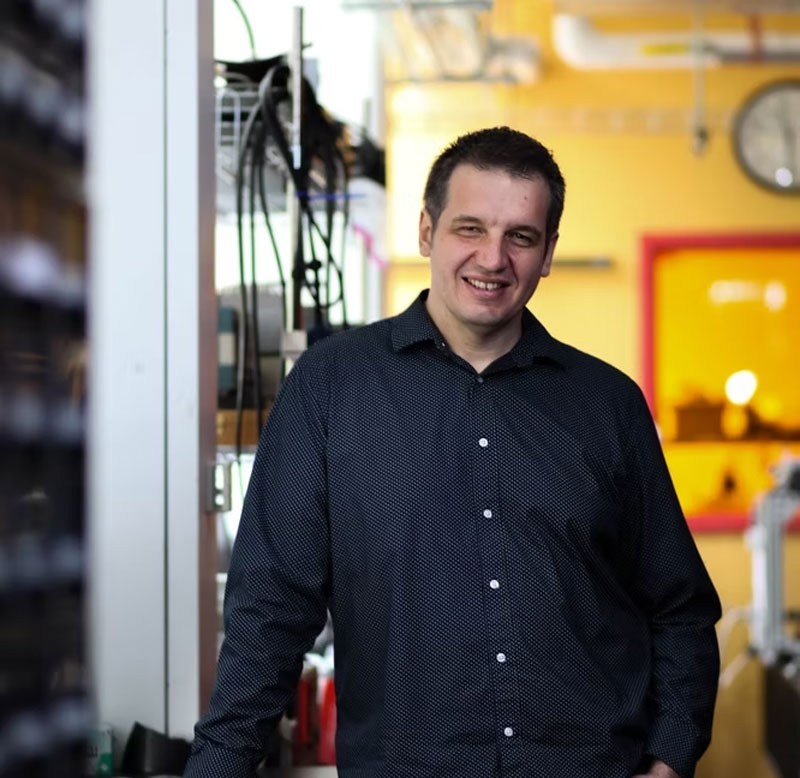
Experts in photonics, quantum systems, and advanced manufacturing. Built to deliver.
Experts in photonics, quantum systems, and advanced manufacturing. Built to deliver.


Whether you're building quantum hardware, advancing medical diagnostics, or developing systems the bandwidth-race photonics companies can't serve — our team is ready to talk.
Australia
Level 3
845 Pacific Highway
Chatswood
Sydney
NSW 2067
United States
Level 14
1 Broadway
Lumina USA Inc
Cambridge
MA 02142
Lumina Corp Pty. Ltd. © 2026
Privacy Policy
Terms
Whether you're building quantum hardware, advancing medical diagnostics, or developing systems the bandwidth-race photonics companies can't serve — our team is ready to talk.
Australia
Level 3
845 Pacific Highway
Chatswood
Sydney
NSW 2067
United States
Level 14
1 Broadway
Lumina USA Inc
Cambridge
MA 02142
Lumina Corp Pty. Ltd. © 2026
Privacy Policy
Terms
Whether you're building quantum hardware, advancing medical diagnostics, or developing systems the bandwidth-race photonics companies can't serve — our team is ready to talk.
Australia
Level 3
845 Pacific Highway
Chatswood
Sydney
NSW 2067
United States
Level 14
1 Broadway
Lumina USA Inc Cambridge
MA 02142
Lumina Corp Pty. Ltd. © 2026
Privacy Policy
Terms